On substrate, plywood offers better screw-holding strength and water resistance than standard MDF and suits kitchen carcasses and wall-hung or load-bearing parts for humid markets, while MDF shapes detailed door profiles more easily. Selection depends on where the cabinet is used, the installation method and target budget — there is no single best answer.
Edge banding blocks moisture from entering the cut edge. Pre-milling and glue control on an automatic line determine bond strength, while end trimming and scraping determine whether corners leave gaps for moisture. Cabinets near sinks or damp walls, together with back panels and plinth areas, need particular attention.
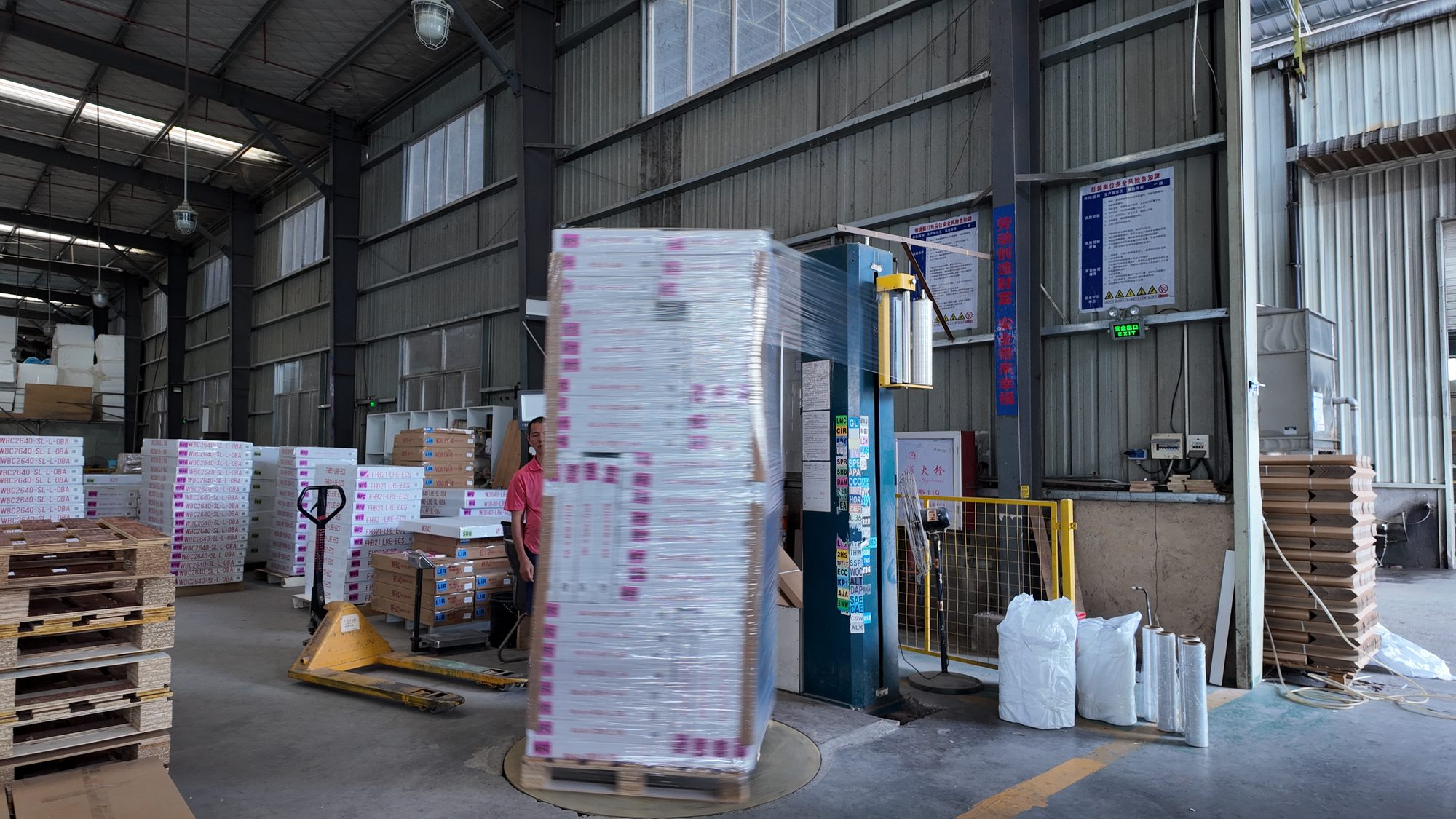
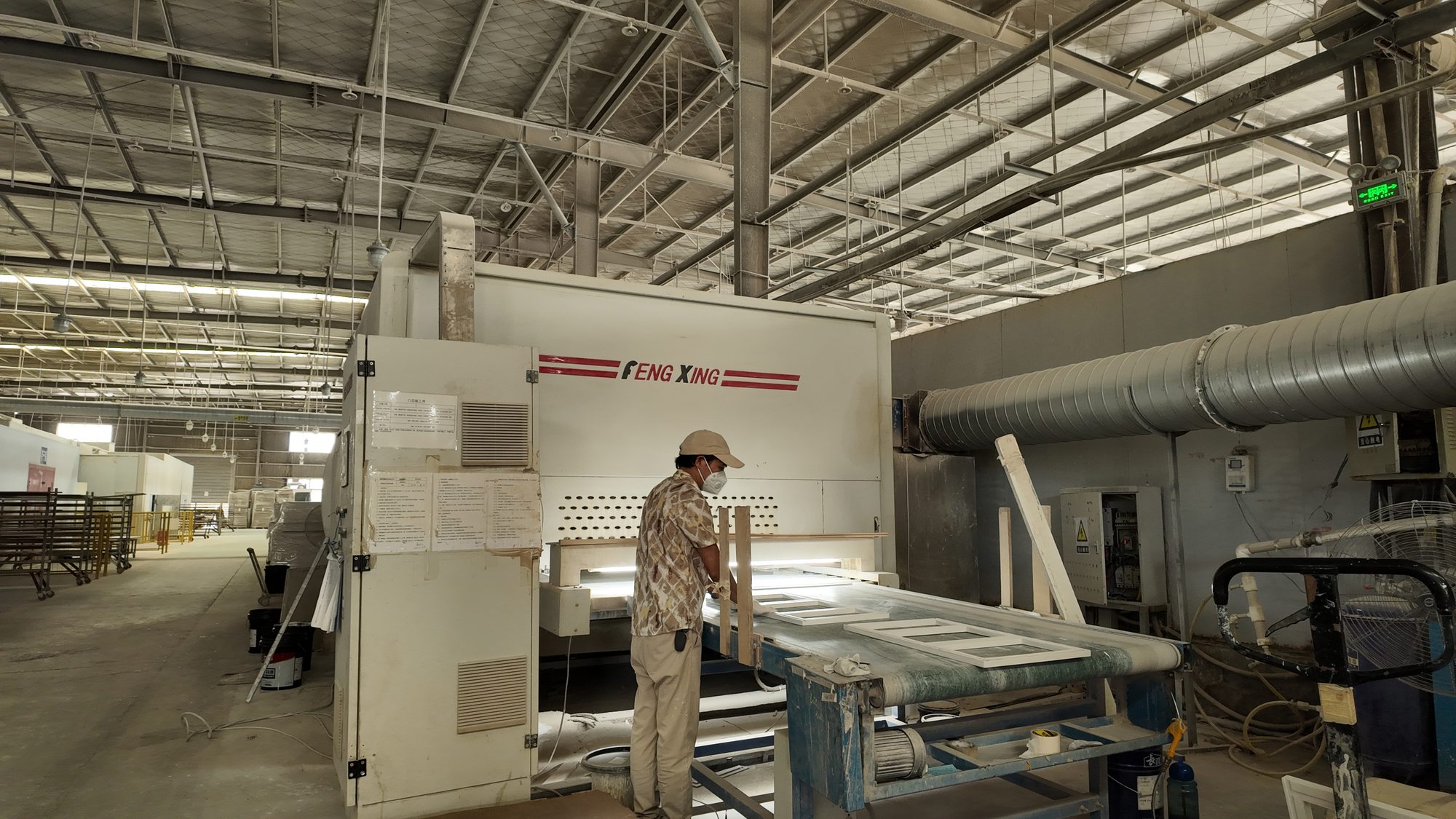
For lacquer, multiple primer and topcoat passes cured in a spray booth improve hardness and wash resistance. Three things indicate lacquer quality: even gloss, no build-up at edges and corners, and no marking under light fingernail pressure. Orders for ocean transit also add desiccant and vapour barrier film at the packing stage.